How much fat actually stays after fat transfer?

If you’re researching fat transfer, you’ve probably seen survival rate percentages that range widely—and wondered what they actually mean for your results. Understanding what to expect requires looking beyond simple percentages to the biology of how transferred fat behaves.
The short answer: most patients retain 50–80% of transferred fat long-term, with final results visible around one year. Here’s what influences that number, and importantly, what you can do to maximize your outcome.
Understanding Fat Survival Rates
Unlike the myth that grafted fat doesn’t last, what we typically see is that somewhere between 50% and 80% of transferred fat survives long-term. However, this range is somewhat misleading without context. What actually happens to transferred fat is far more nuanced than a simple percentage can capture.
When fat is harvested from one area of your body and transferred to another, the fat cells undergo significant stress. During the first few weeks after your procedure, some of the transferred fat will inevitably be reabsorbed by your body—this is a normal part of the healing process. The fat that does survive this initial period integrates with the surrounding tissue and establishes a blood supply, allowing it to thrive in its new location.
What Actually Happens to Transferred Fat?
What we’ve learned from contemporary research is that the initial weeks after fat transfer involve more than simple cell survival or death. A portion of the grafted fat may initially die, but the remaining cells—specifically the fat-derived stem cells (adipose-derived stem cells) and early-stage cells that can develop into mature fat (progenitor cells)—differentiate into mature fat cells, absorb lipids, and integrate seamlessly into the surrounding tissue.
This cellular cascade creates long-term stability. Once these cells have matured and established themselves, they behave like the fat cells in the recipient area—responding to weight changes the same way your natural fat does. The transferred fat will expand with weight gain and shrink with weight loss, which is why maintaining a stable weight is important for preserving your results.
One of the most biologically unique aspects of transferred fat cells is that they behave in the same way before and after transfer.
Factors That Influence Fat Survival
Several variables affect how much fat ultimately survives in its new location.
Surgical Technique
The method used to harvest, process, and inject the fat significantly impacts survival rates. Gentle handling during liposuction, proper purification, and precise injection techniques all contribute to better outcomes. Fat injected in small parcels at different depths has a better chance of establishing a blood supply than large deposits placed all at once.
Treatment area
Different areas of the body retain fat differently. Facial fat grafting typically shows excellent integration because of the rich blood supply in the face. Breast fat transfer benefits from larger cannulas that deliver better parcels of fat along with their supporting connective tissue (stroma), which helps fat cells thrive. Brazilian butt lift procedures require strategic placement depth to maximize both safety and retention.
Post-operative care
Avoiding pressure on the treated area, maintaining stable body weight, not smoking, staying hydrated, and following your surgeon’s instructions all contribute to better retention.
Individual healing
Each patient’s metabolism, circulation, and overall health influence how well their body accepts and maintains transferred fat. Smokers and patients with compromised circulation may experience lower retention rates.
What to Expect in First Few Months After Fat Transfer
Perhaps the most important thing to understand about fat transfer results is the timeline. Many patients become concerned when they notice volume loss in the first few months after their procedure, but this is entirely normal.
You’ll experience the most significant changes during the first four months. Post-surgical swelling gradually resolves during this period, and some of the transferred fat is naturally reabsorbed. This combination can make it appear that the procedure didn’t work, but this is the worst time to evaluate your results.
By the six-month mark, the fat graft has largely stabilized. However, the true final outcome doesn’t become apparent until around one year post-procedure. This is when the transferred fat has fully matured and integrated with the surrounding tissue. Once fat reaches this stage, it remains in place indefinitely, behaving like any other fat in your body. The one-year mark is when I take final post-op photos of my patients who underwent a fat transfer procedure.
Maximizing Your Fat Transfer Results
While some factors affecting fat survival are beyond your control, there are steps you can take to optimize your outcome:
- Maintain a stable weight. Significant weight fluctuations can impact your results. Weight loss can cause the transferred fat to shrink, while weight gain can cause it to expand.
- Avoid smoking. Nicotine constricts blood vessels and impairs healing, directly affecting fat cell survival. Patients must stop smoking well before and after the procedure. This applies to vaping and inhalation of any smoke as well—anything that competes with oxygen for hemoglobin’s attention can compromise circulation and reduce fat retention. Patients must stop smoking well before and after the procedure.
- Follow positioning instructions. Depending on the treatment area, you may need to avoid sleeping or sitting in certain positions during the initial healing period to prevent pressure on the transferred fat.
- Attend follow-up appointments. Regular check-ins allow your surgeon to monitor your healing and address any concerns early.

“Now that I am 4 months post surgery, I feel and look amazing. I have my teenager body back, with a flat tummy and perky breasts. I look at myself with confidence and ask myself why hadn’t I done it sooner.”
What to Expect: Volume Gain After Fat Transfer
Fat grafting achieves subtle but noticeable volume increases. While exact amounts vary based on multiple factors, most patients can expect to see mild to moderate volume enhancement and improved contours.
For breast augmentation with fat transfer, patients see significant improvement in upper pole fullness (the rounded area above the nipple), and can usually gain a cup size or slightly more. For facial rejuvenation, fat grafting restores youthful volume to areas like the temples, cheeks, and under-eyes. Brazilian butt lifts can achieve more dramatic results when performed using optimal techniques with appropriately sized cannulas.
Some patients benefit from staged fat grafting procedures. Research shows that subsequent fat transfer treatments often achieve larger gains because the body has been conditioned to accept grafted fat from the initial procedure. However, most patients are satisfied with single-stage grafting.
Why Surgical Expertise Matters
The success of any fat transfer procedure depends heavily on surgical expertise at every stage—from assessing donor areas and harvesting fat, to processing it properly, to placing it strategically in the recipient site. An experienced cosmetic surgeon should understand how to maximize fat survival through refined techniques while maintaining natural-looking results.
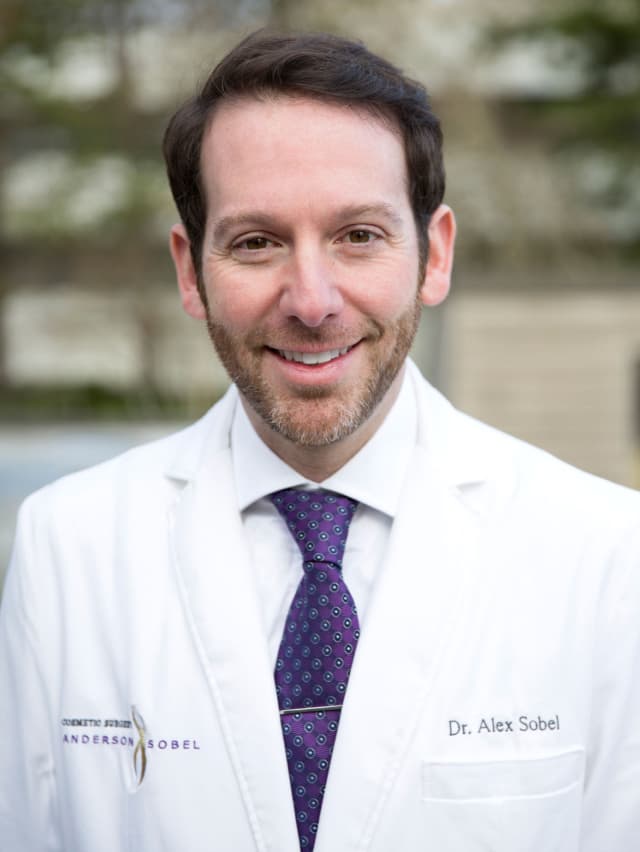
Dr. Alex Sobel is triple board-certified in general cosmetic surgery, facial cosmetic surgery, and otolaryngology. He has published research on fat grafting techniques in The American Journal of Cosmetic Surgery and has trained other cosmetic surgeons in fat transfer procedures.
If you’re considering fat grafting to the face, breasts, or buttocks, the most important step is consulting with a board-certified cosmetic surgeon who specializes in this technique. During your consultation, we can discuss your goals, assess your candidacy, and develop a personalized treatment plan.
To schedule a complimentary consultation with Dr. Sobel at our Bellevue practice, call Anderson Sobel Cosmetic Surgery at (425) 453-9060 or contact us online.
- Triple board-certified in general cosmetic surgery, facial cosmetic surgery, and otolaryngology
- 15+ years of experience specializing in cosmetic surgery
- Operates in an on-site accredited surgical suite for patient safety and privacy
- National leader in cosmetic surgery, including as Past President of the American Board of Cosmetic Surgery and the American Academy of Cosmetic Surgery, and as an expert speaker at medical conferences
- Former Seattle Met Top Doctor with hundreds of 5-star patient reviews
References »
Abu-Ghname A, Perdanasari AT, Reece EM. Principles and Applications of Fat Grafting in Plastic Surgery. Semin Plast Surg. 2019 Aug;33(3):147-154. doi: 10.1055/s-0039-1693438. Epub 2019 Aug 2. PMID: 31384229; PMCID: PMC6680081.
Sobel AW, Obagi S. Safety and Ethics in Gluteal Augmentation via Autologous Fat Grafting. The American Journal of Cosmetic Surgery. 2019;36(2):53-54. doi:10.1177/0748806819828939
Denton, P.D., Sobel, A.W., Alexander, R.W. (2025). Facial Fat Grafting: Principles and Techniques. In: Bohluli, B., Obagi, S., Diepenbrock, R., Ghasemi, S., Jeffrey, J. (eds) Office-Based Facial Cosmetic Surgery. Springer, Cham. https://doi.org/10.1007/978-3-031-85163-6_66