5 Reasons Chin Augmentation is the Most Underrated Procedure

When patients come to my Bellevue office thinking about facial rejuvenation, they usually have their sights set on the usual suspects: facelifts, eyelid surgery, maybe rhinoplasty. Chin augmentation rarely makes it onto their initial wish list.
Yet I’d argue that chin augmentation might be one of the most transformative—and consistently overlooked—procedures I offer. A well-proportioned chin not only improves your profile; it changes how your entire face reads, often in ways that surprise even long-time patients.
Here is why chin augmentation deserves more attention than it gets.
1. It Transforms Your Entire Face, Not Just Your Chin
The chin acts as an anchor point for your entire facial structure. When it’s in proper proportion with your other features, everything else falls into place visually.
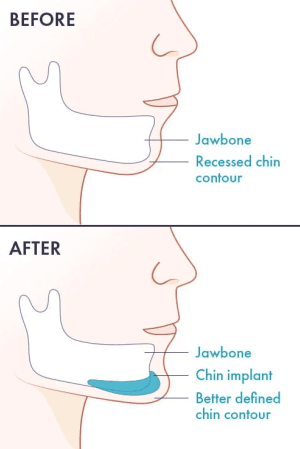
I see this play out constantly in consultations. A patient comes in concerned about their nose looking too prominent, or they are frustrated by what they perceive as an “unbalanced” lower face. Often, the real issue is that a recessed chin is creating an optical illusion that throws off their facial balance.
When the chin is brought into proper proportion with the rest of the face, suddenly the nose doesn’t look quite so large. The jawline appears more defined. The neck looks longer and more elegant. We haven’t touched any of those other features, yet they all look different because we have addressed the foundation.
This is why I sometimes recommend chin augmentation alongside rhinoplasty. The two procedures complement each other beautifully, creating facial harmony that neither achieves alone. In fact, facial analysis for rhinoplasty should always include evaluation of chin projection—they’re that interconnected.
The Profile Test
Here’s something I tell patients: have someone take a photo of your profile, then use your fingers to cover your chin. Notice how different your nose suddenly appears? That’s the chin’s influence on facial perception.
2. The Recovery is Relatively Quick
One reason patients gravitate toward non-surgical options is the fear of downtime. They assume any “real” surgery means weeks of recovery, missed work, and obvious signs they’ve had something done.
Chin augmentation doesn’t follow that script.
The procedure itself takes less than an hour when performed on its own. I make a short incision either underneath the chin (where it’s virtually invisible) or inside the mouth, place the custom-fitted implant securely over the chin bone, and close the incision. Most patients go home the same day and can return to desk work within just a few days. You’ll have some swelling and possibly bruising for the first week or two, but it’s generally manageable with cold compresses. Strenuous activity needs to wait a few weeks, but your day-to-day life continues much the same.
Compare this to a facelift, which typically requires 10-14 days before you’re comfortable being seen socially, or a rhinoplasty, where swelling can persist for months. Chin augmentation offers dramatic improvement with relatively minimal disruption to your schedule.
3. You Can Try Before You Commit (Sort of)
One of the things I appreciate about modern chin enhancement is that we now have options beyond permanent surgical implants—though implants remain the gold standard for substantial, lasting change.
For patients who aren’t quite ready for surgery, or who want a preview of what improved chin projection might look like, injectable fillers like Juvéderm Voluma, Juvéderm Volux, or Radiesse offer a temporary alternative. I can strategically place filler to add volume and definition to the chin and jawline, creating improvements that last 12-24 months.
This “trial run” approach serves several purposes. First, it lets you live with enhanced chin contours and see how you feel about the change. Second, it gives you a realistic preview of what a permanent implant might achieve—though fillers achieve more moderate change compared with an implant. Third, for patients who only need modest enhancement, fillers might be sufficient on their own.
That said, if your goal is substantial, permanent change, chin implants are the superior option. They’re typically a “one and done” solution that lasts a lifetime, whereas fillers require ongoing maintenance. The choice depends on your goals, timeline, and commitment level.
- Related: Learn about Dr. Sobel’s chin implants for men »
4. It Addresses Aging in Ways You Might Not Expect
We tend to think of chin augmentation as correcting a structural issue—a small or recessed chin that’s been there since birth. And certainly, many patients fall into this category.
But chin augmentation also plays an interesting role in facial rejuvenation for aging patients. As we age, we lose volume in the soft tissues of the face, including around the chin and prejowl area. This volume loss can make the chin appear weaker, even if it was well-proportioned in youth.
Additionally, when jowls begin to form, they create a visual contrast that makes the chin look more recessed by comparison. The jawline loses its clean definition.
Strategic chin augmentation can address both issues. By restoring projection to the chin, we create better balance with the developing jowls—sometimes even camouflaging early jowl formation. The jawline regains definition. The entire lower face looks more youthful and structured.
This is why I sometimes recommend chin augmentation as part of a facelift. The facelift addresses sagging skin and tissue descent, while the chin implant restores the underlying structural foundation. Together, they create comprehensive lower face rejuvenation that looks natural and balanced.

5. The Results Look Like You, Just Better
There’s a pervasive fear in cosmetic surgery of looking “done”—obviously altered, no longer quite yourself.
Chin augmentation sidesteps this concern beautifully when performed correctly. Because it works with your existing bone structure and simply brings your chin into better proportion, the results enhance your natural appearance rather than creating something foreign.
During the consultation, I recommend specific implant sizes and shapes designed to complement your unique facial features. A strong, masculine chin enhancement for a male patient looks entirely different from the refined, feminine result we’d create for a female patient. The goal is always harmony with your existing features.
What patients tell me afterward is revealing: “I just look like a better version of myself.” Friends and family notice they look great but can’t quite pinpoint what changed. The improvement is obvious, but the intervention isn’t.
This natural-looking enhancement is one of chin augmentation’s greatest strengths. You’re not getting a “new” face—you’re getting the face you would have had if genetics had been slightly more generous with your chin projection.
What to Expect from Chin Augmentation
At our Bellevue practice, I use medical-grade solid silicone implants that are biocompatible, durable, and elastic. These implants are designed to last a lifetime, though they can be removed or replaced if desired (though this is quite rare).
The procedure is usually performed under general anesthesia or local anesthesia with IV sedation, depending on your preference and whether other procedures are performed at the same time. After placing the implant through that small, well-concealed incision, I secure it over the chin bone for a stable, natural result.
Some patients need the chin enhanced in isolation. Others benefit from combining chin augmentation with complementary procedures—rhinoplasty for overall facial balance, neck liposuction to further refine the jawline, or a facelift for comprehensive facial rejuvenation.
The cost of chin augmentation in Seattle ranges from $2,700 to $7,300 depending on the specifics of your procedure. During your consultation with Dr. Sobel, we’ll discuss exactly what’s involved and provide a detailed quote.
Chin augmentation makes sense if you’ve noticed that your chin appears small or recessed compared to your other facial features, your profile lacks definition, your jawline seems weak or poorly defined, or you’re considering rhinoplasty and want optimal facial balance.
It’s worth noting that if your concern is primarily excess fat under the chin rather than chin size or projection, chin liposuction or Kybella injections might be better options. I evaluate all of these factors during consultation to recommend the approach that will actually address your specific concerns.
Give us a call at (425) 453-9060 or contact us online to schedule your complimentary consultation with triple board-certified Bellevue plastic surgeon Dr. Alex Sobel.